


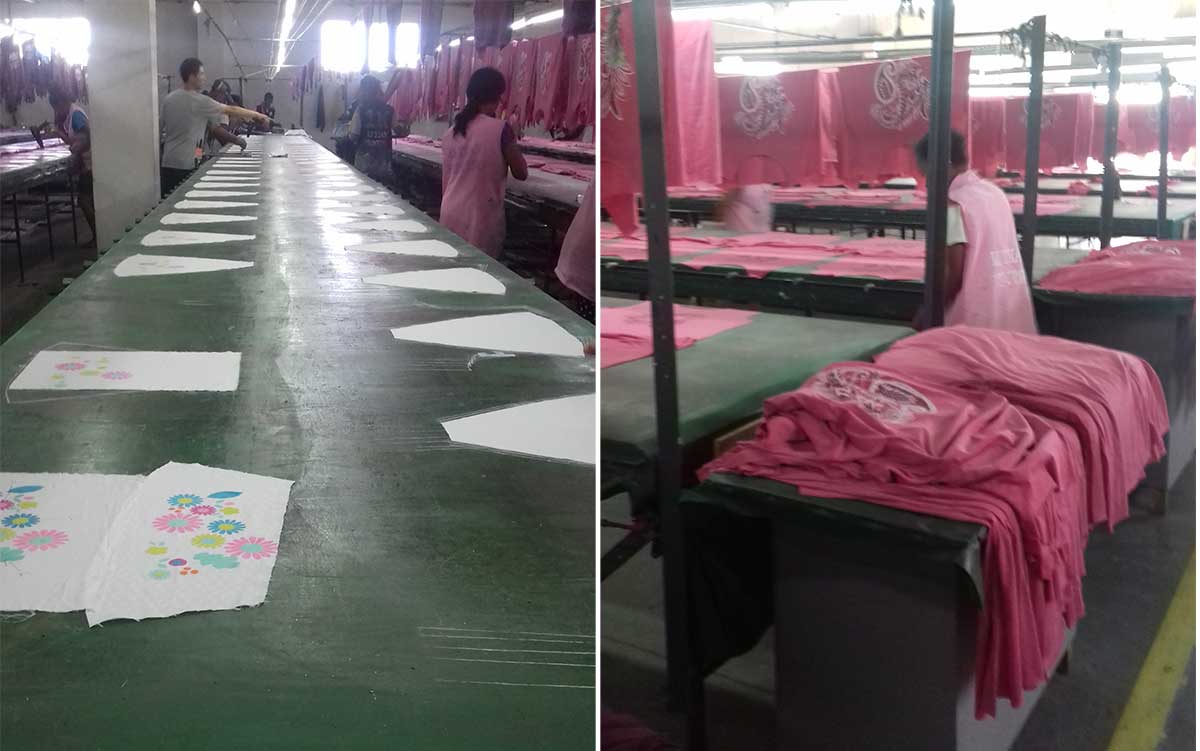
Line table screen printing is a widely adopted screen printing technique prominently used across Asia, Africa, and South America. This economical and accessible method involves a meticulous alignment of pallets, akin to a table, designed to facilitate efficient printing on a variety of flat surfaces, including textiles, metals, and plastics. Despite being a traditional approach, its enduring appeal lies in its versatility and as an affordable starting point for screen printing T-shirts, line table screen printing continues to offer a dependable solution for cost-conscious businesses and independent creators alike.
Test Your Knowledge
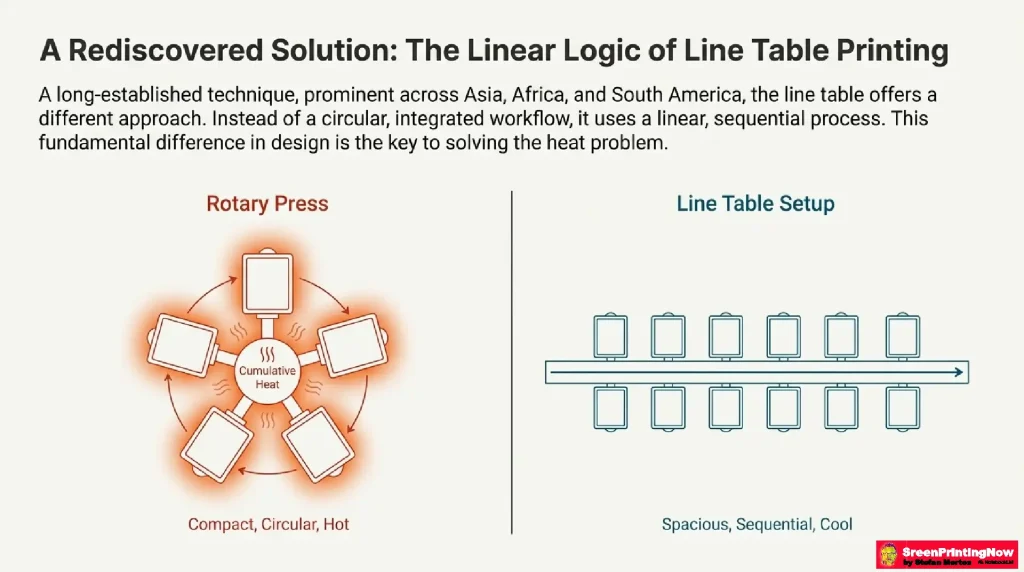
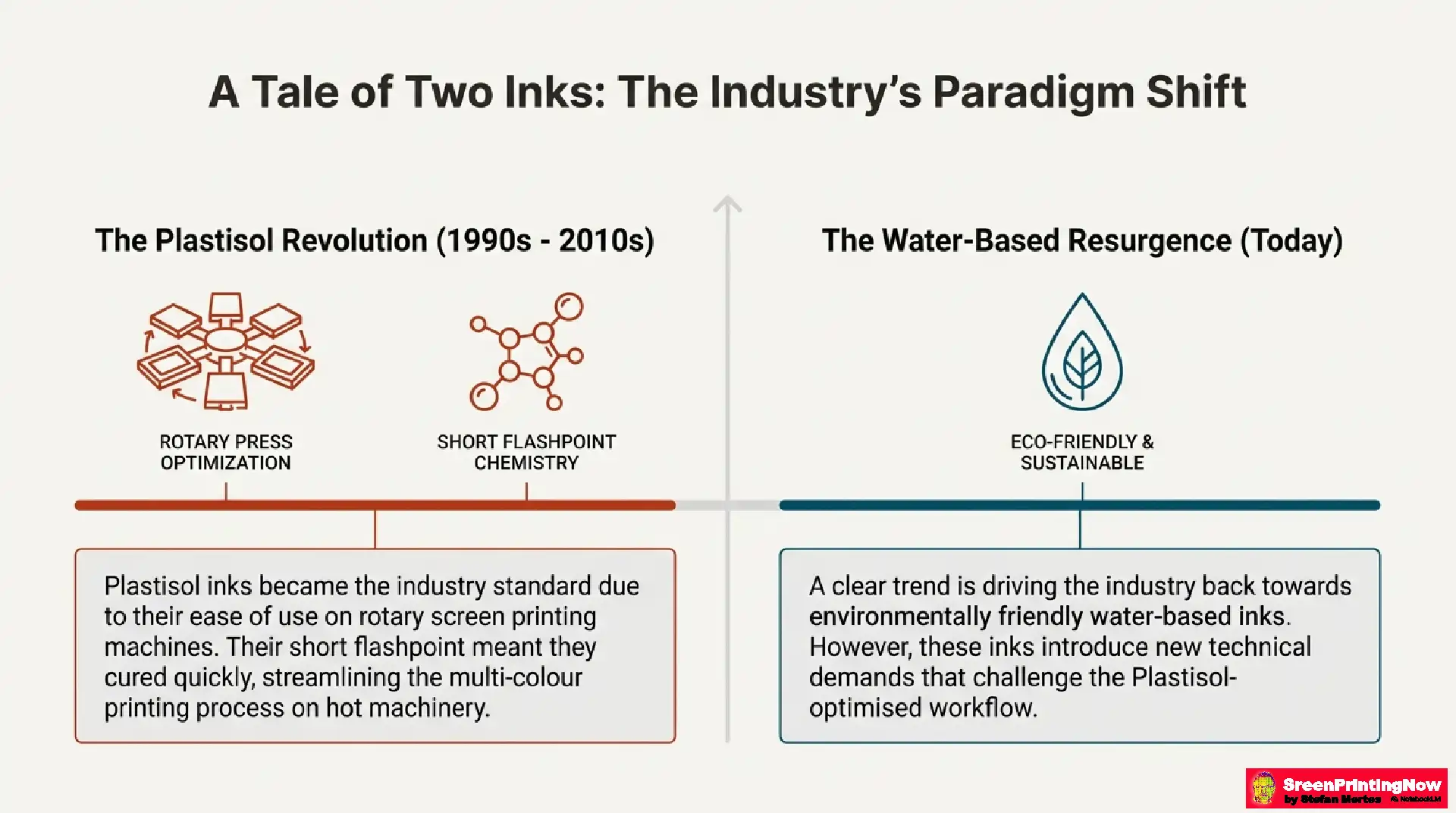
Before the 90s we screen printed mostly water-based inks, this changed in the 90s as Plastisol inks hit the market and changed the Screen Printing Industries, it is almost the standard ink today, in screen printing shops. Plastisol inks are much easier to print on rotary screen printing machines. Plastisol inks have a very short flashpoint. As a result, they dry much faster under a flash cure and it is easy to print the next color on it.
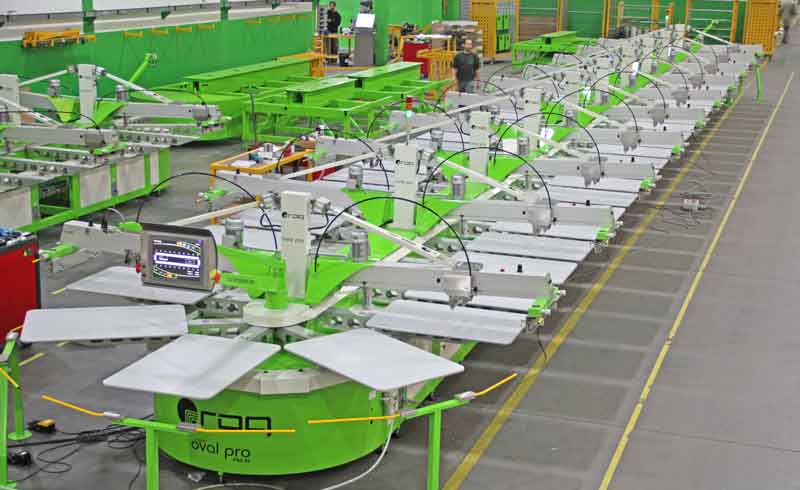
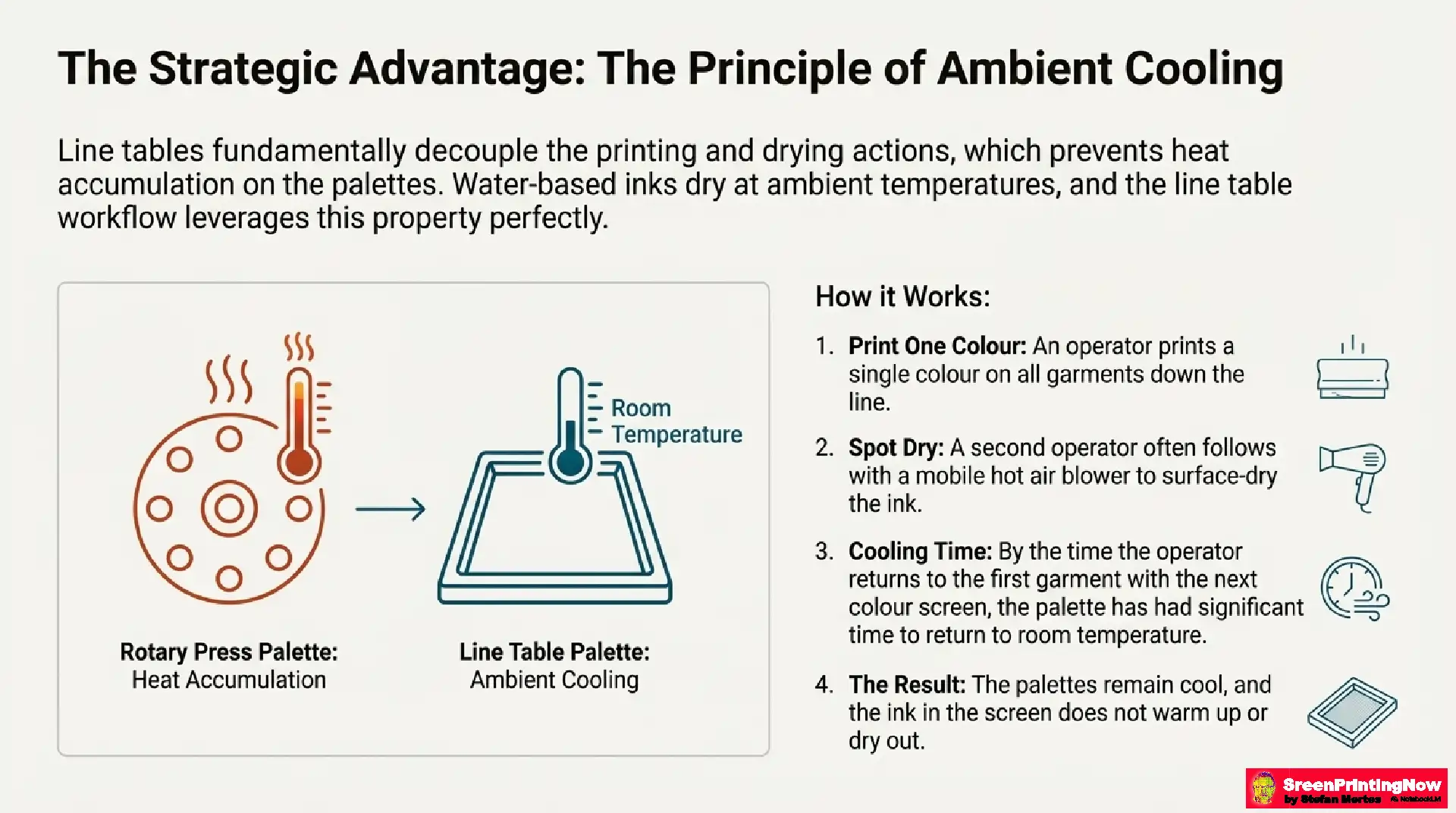
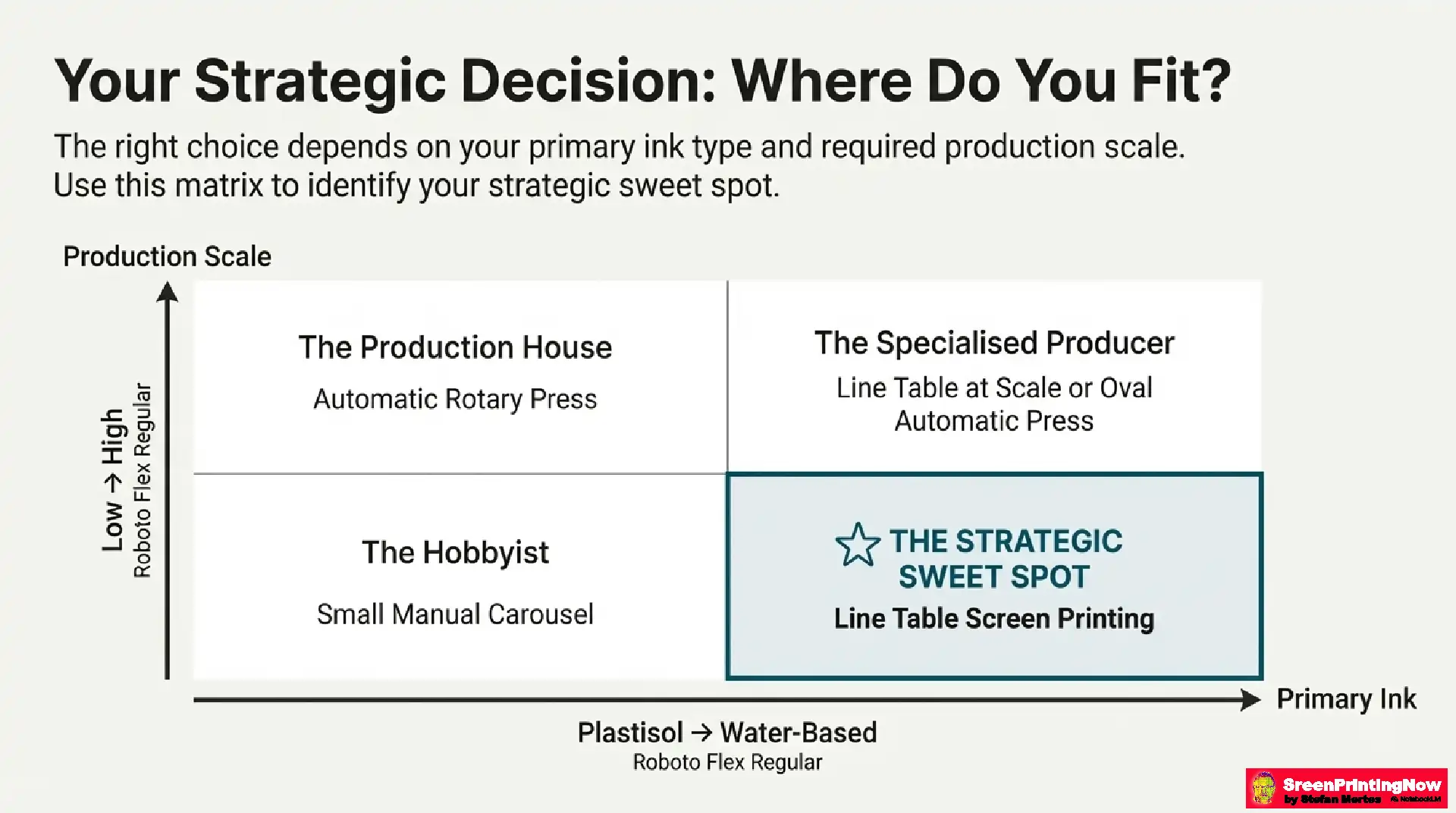
But today, the trend is clearly towards environmentally friendly water-based inks. Water-based inks need longer to dry under a flash cure because you need to get the water out before it can be overprinted again. And that’s where the Line Table has clear advantages. Look at today’s Oval Automatic screen printing machines.
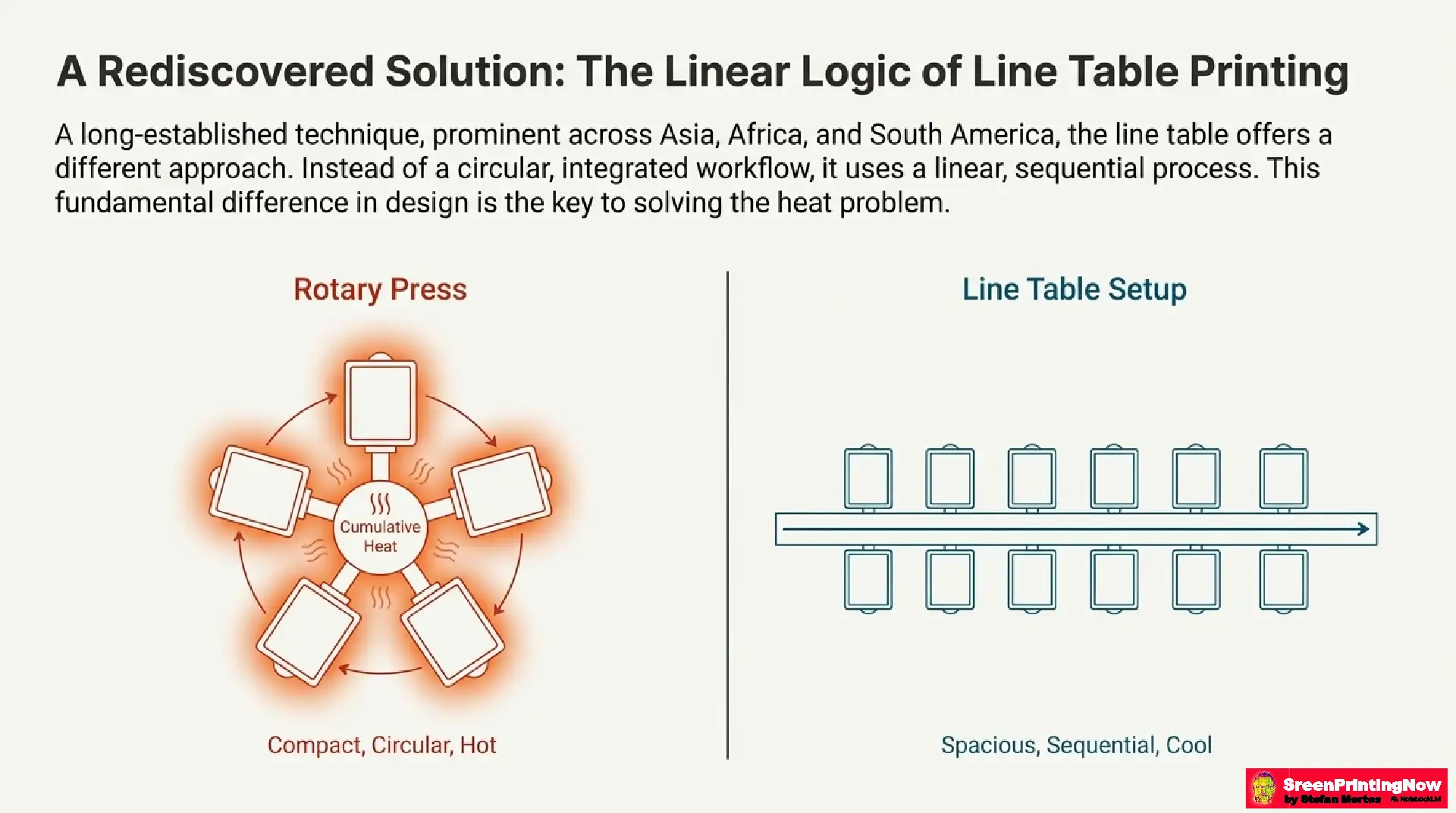
They have much more space in between the printing heads, the result is, that the printed water-based ink, has more time to cool down before the next color is printed. This is very important for water-based inks. To keep the pallets cool and ink itself in the screen should not warm up.
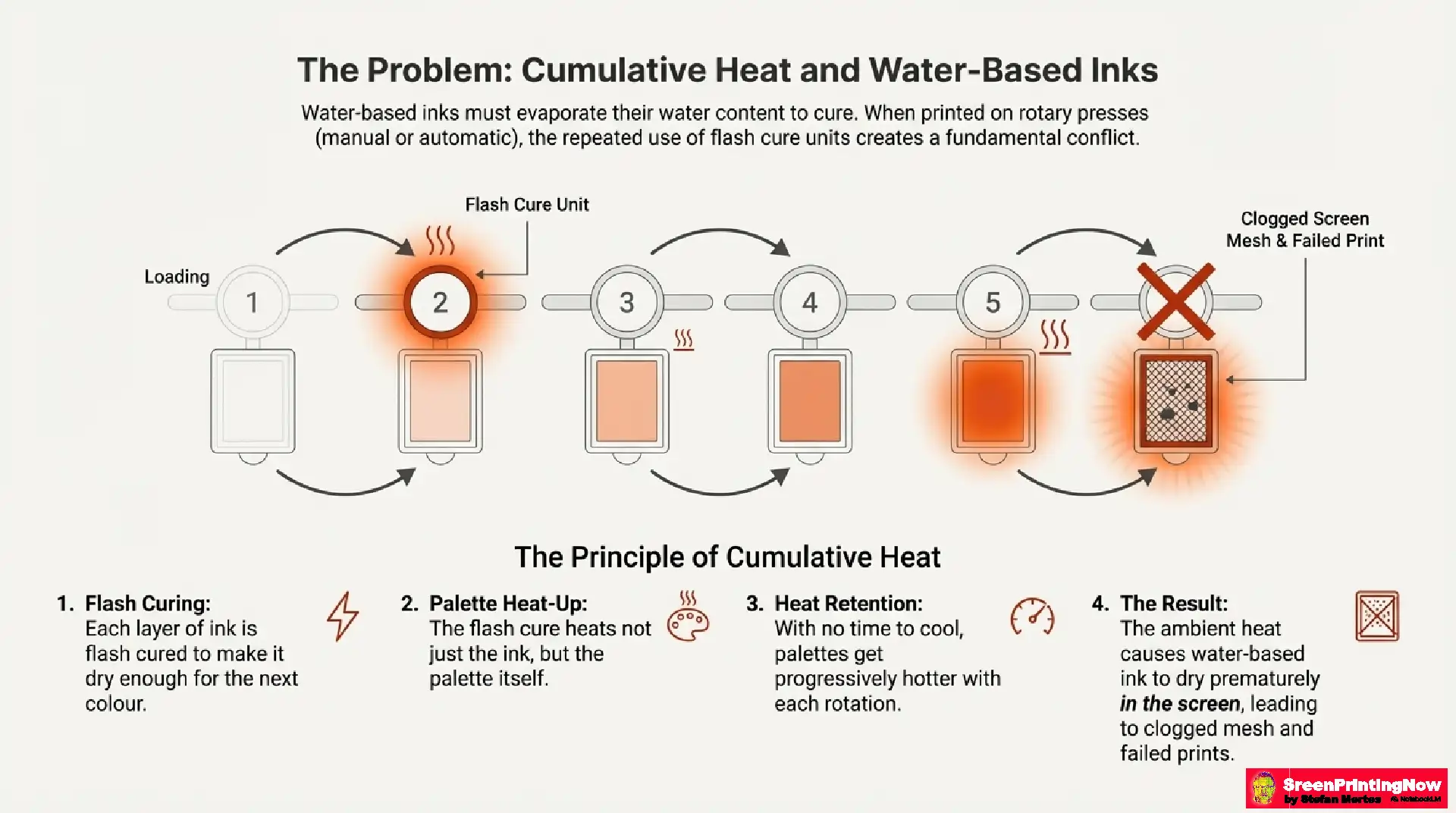
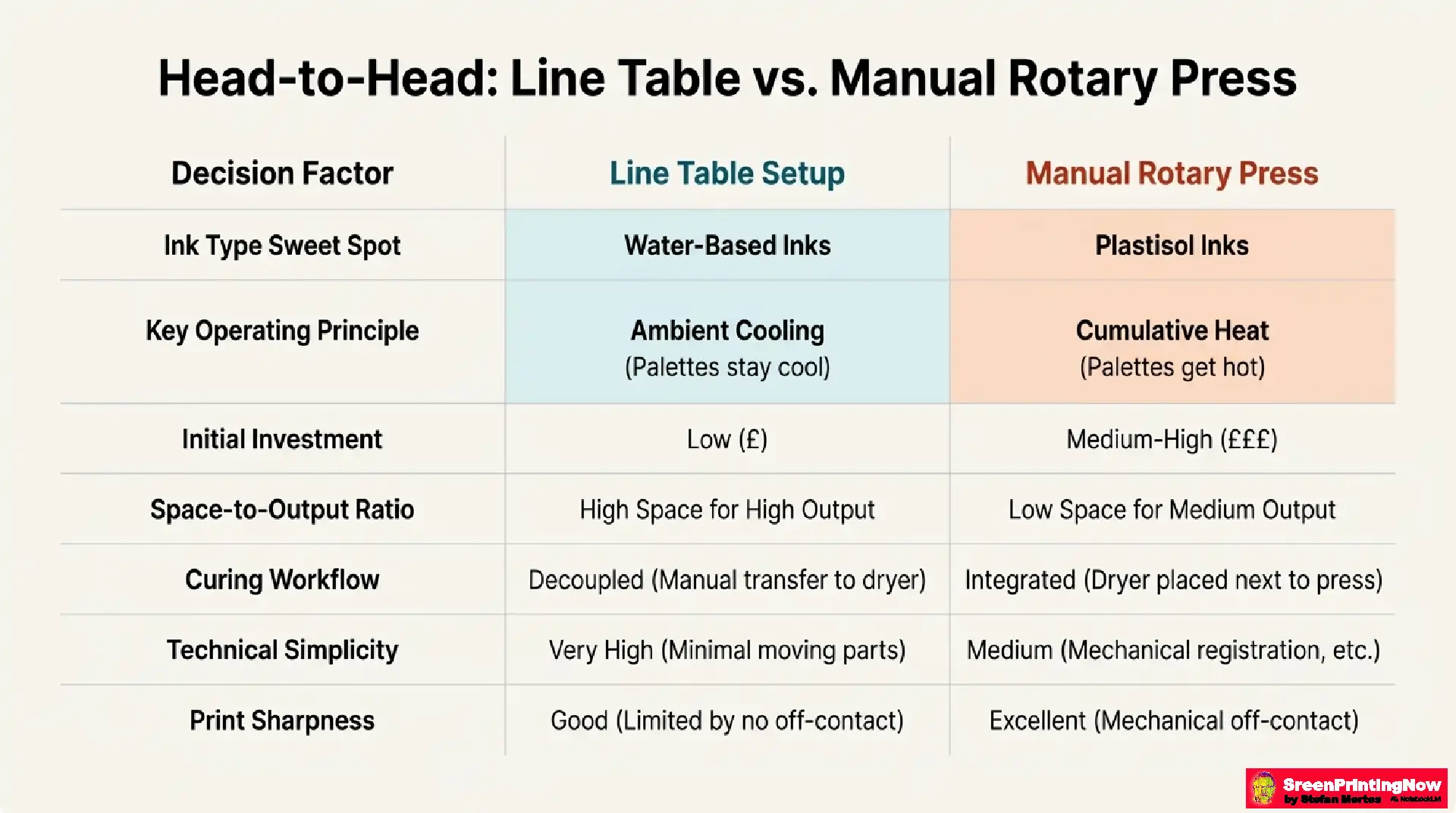
As per the line table, You start with a screen and print as many t-shirts as possible in one round. Normally someone follows with a “hot air dryer” (or other heat-generating tools, but best is with a hot airflow) to dry the ink. Once you are done with one color, you take the next screen and print the next color. in the meantime, the ink, you printed before and dried, has time to get back to room temperature. This means your ink, on the screen does not dry up as fast when you hit the next layer of ink to the garment, and that’s one advantage of line table printing. Line table platten are less hot.
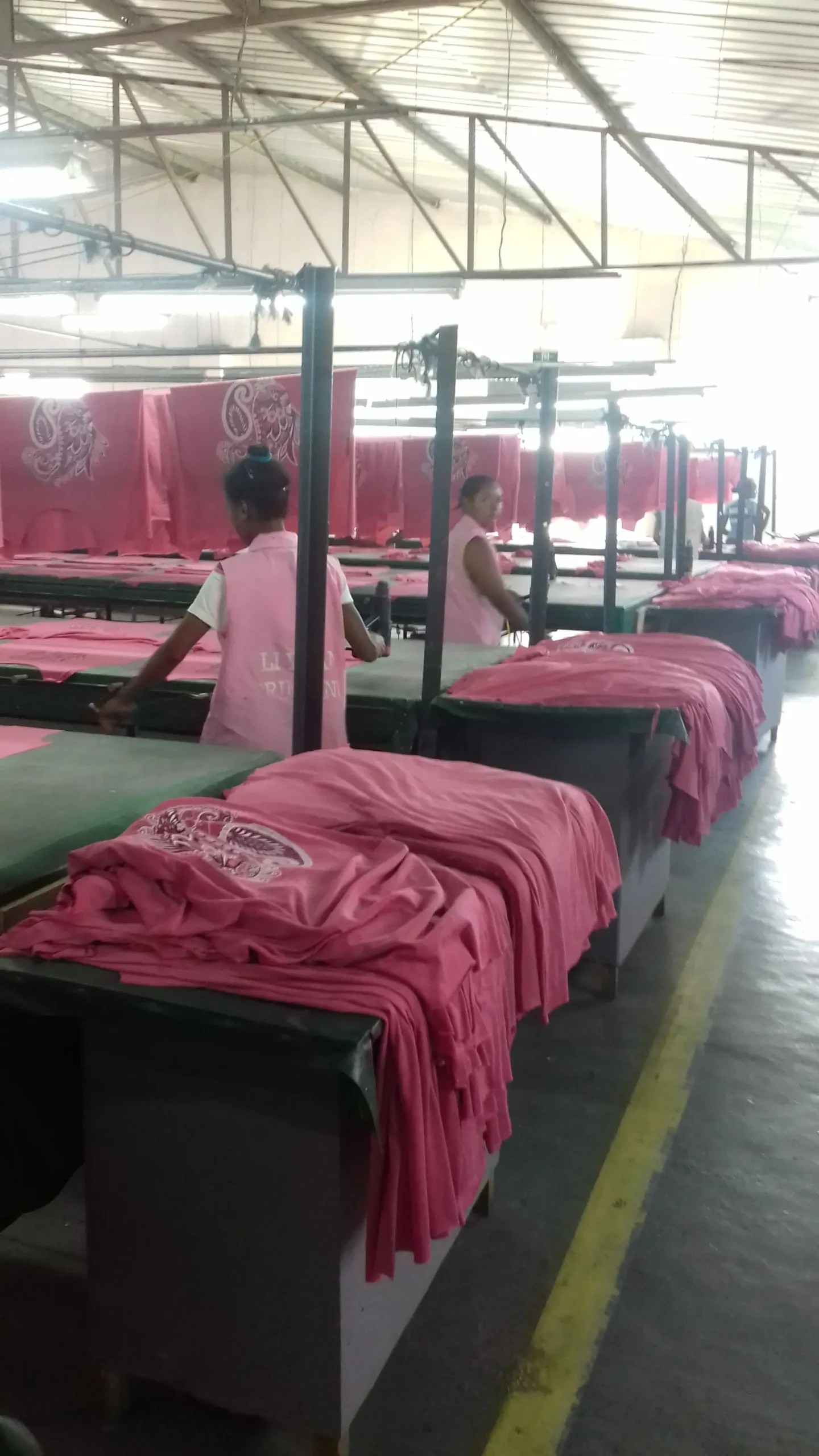
As said The line table platens have time to cool down, also the platen never heats up like on an automatic printing machine.
Remember, water-based inks dry at ambient temperature, and plastisol inks do not.
This means for automatic rotary screen printing machines this incl. manual printing. By using a flash cure, the palettes have the tendency to get too hot. This can cause by water-based screen printing inks, that dry out in the screen and create clogged screens.
Byline tables work differently, you mostly do not use a flash cure.
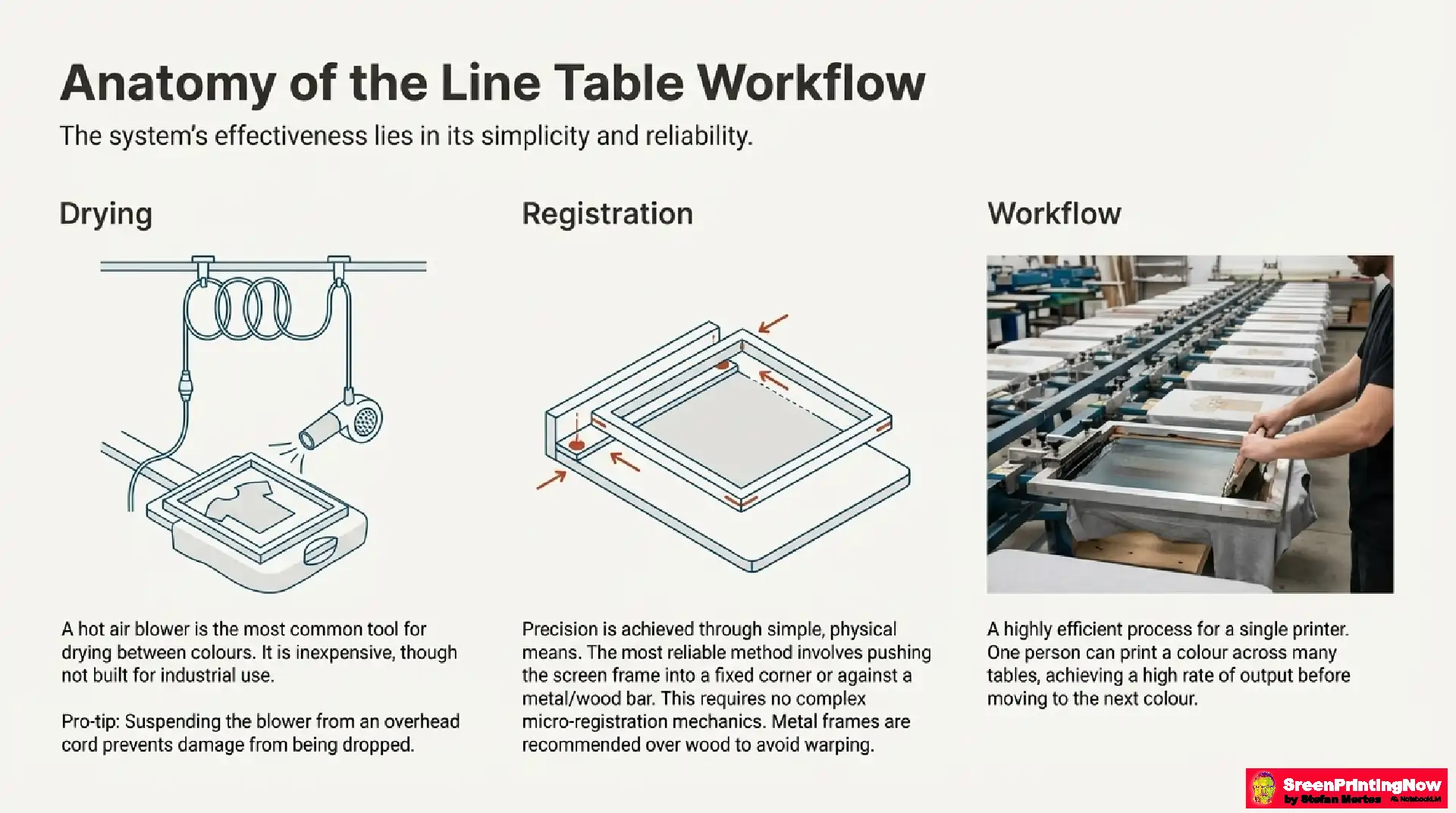
A hot air blower is mostly used for screen printing line tables. It is an inexpensive choice. However, the disadvantage is that they often break quickly due to dropping or constant use because they are not really built for industrial use.
To avoid the dropping of the hot air blower. You can hang the blower high, like on a washing robe cord, along with the line table so that there is no chance of it falling down to the ground.
To archive a certain production output, you should have many, even more, if not hundreds of tables, to increase production.
But this also takes up a lot of space, where the automatic or manual printing machine will be much more space-saving.
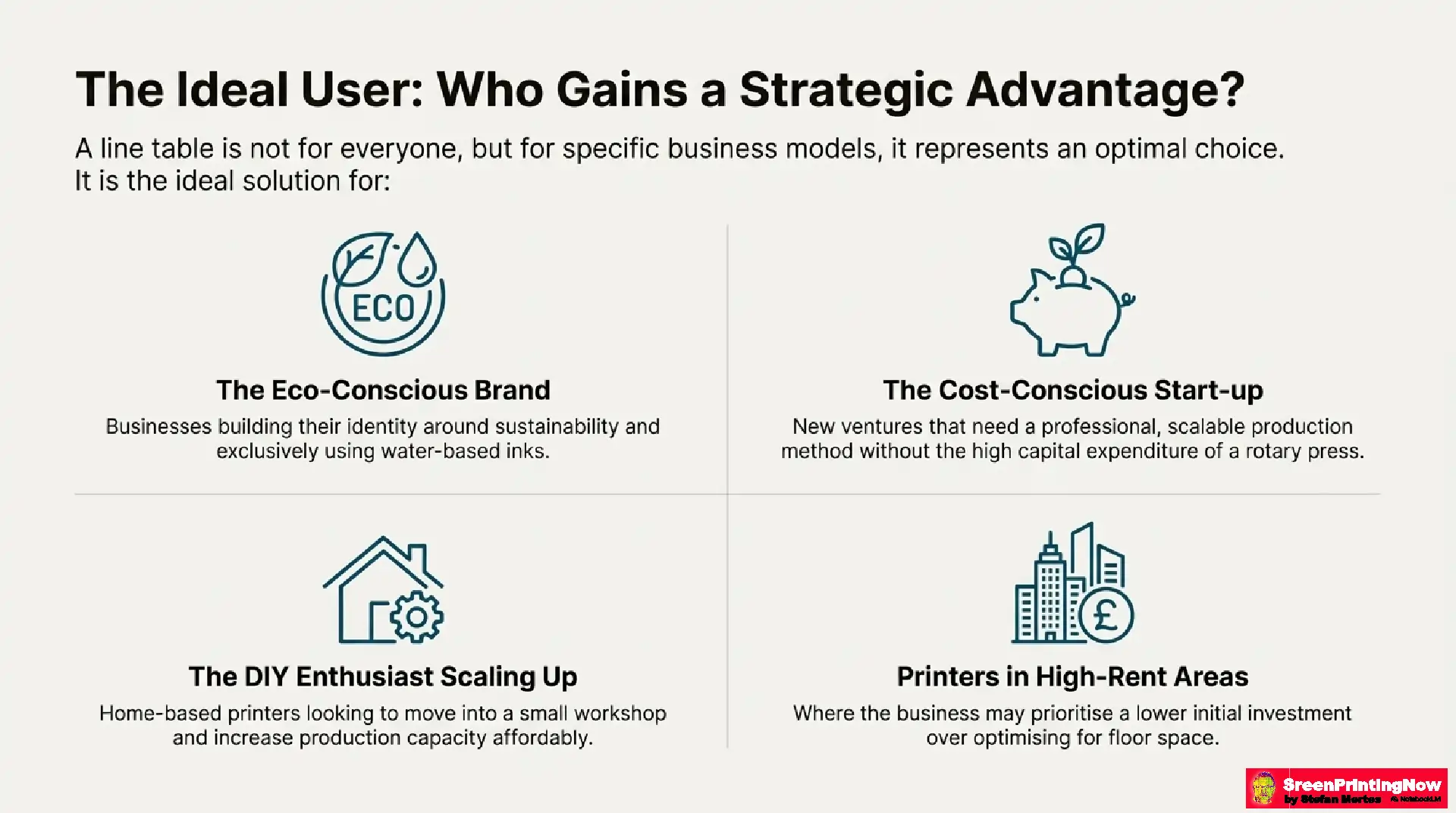
And remember, Line Table printing, is a very low-cost entry, to start screen printing.
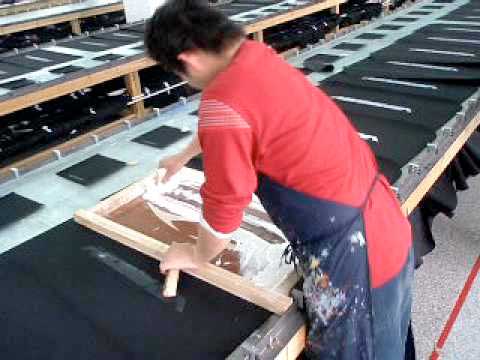
Line Table Screen Printing Benefits
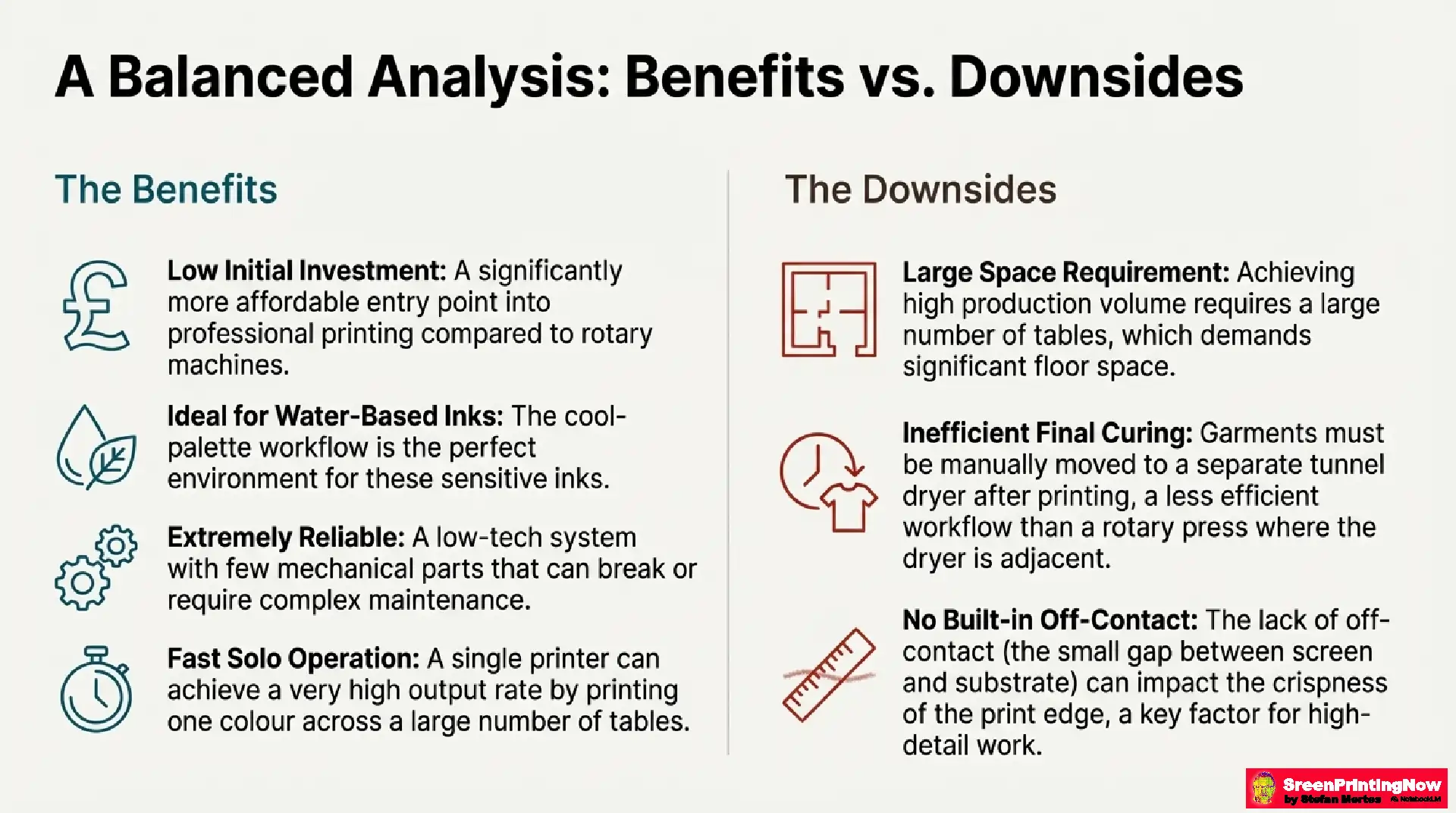
- A Single Person can print very fast with many tables.
- It’s the perfect choice for water-based printing inks. Considering, that water-based ink, does not like too much heat.
- Line Tables are low-tech, what have the advantage of nothing can really break or get damaged.
- Low-cost investment, compared to a Rotary Printing Machine or Oval Printing Machine
Screen Print Table Downside
Caution
- However, for high production, you would need many tables, and this needs space, and then it gets costly.
- To cure the garment, they need to move once again to a dryer, which is not so efficient, as by a rotary press, where the dryer stands next to it.
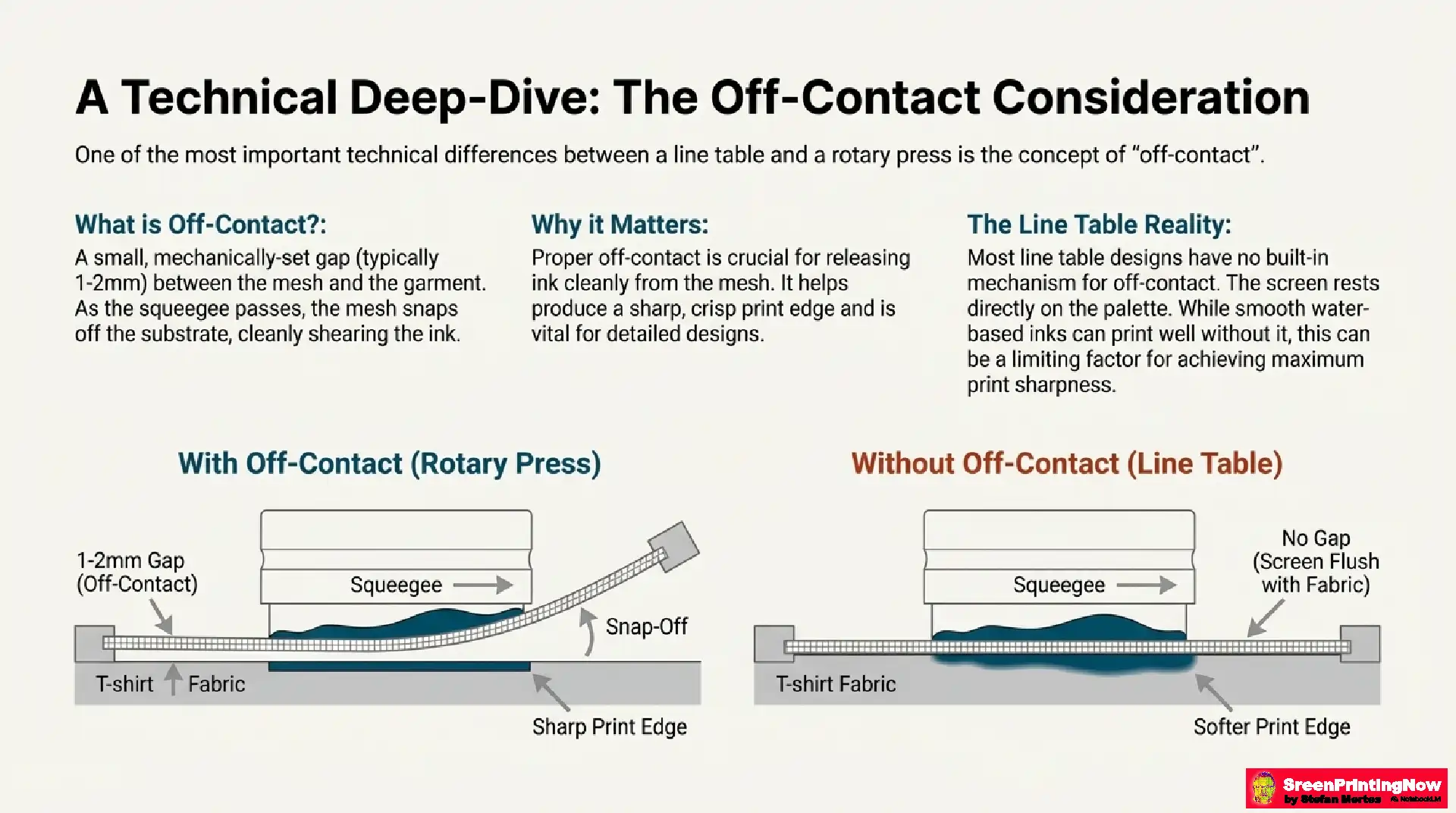
- You have no off contact, with the screen. Off contact helps to release the ink from the mesh and produce a sharp crisp edge.
Screen Printing line table, is very often used in Asia, as mentioned to be productive you would need a lot of them and then you are able to get a very nice production. But thinking about a small table, this is only good for home use, or a real small production workshop.
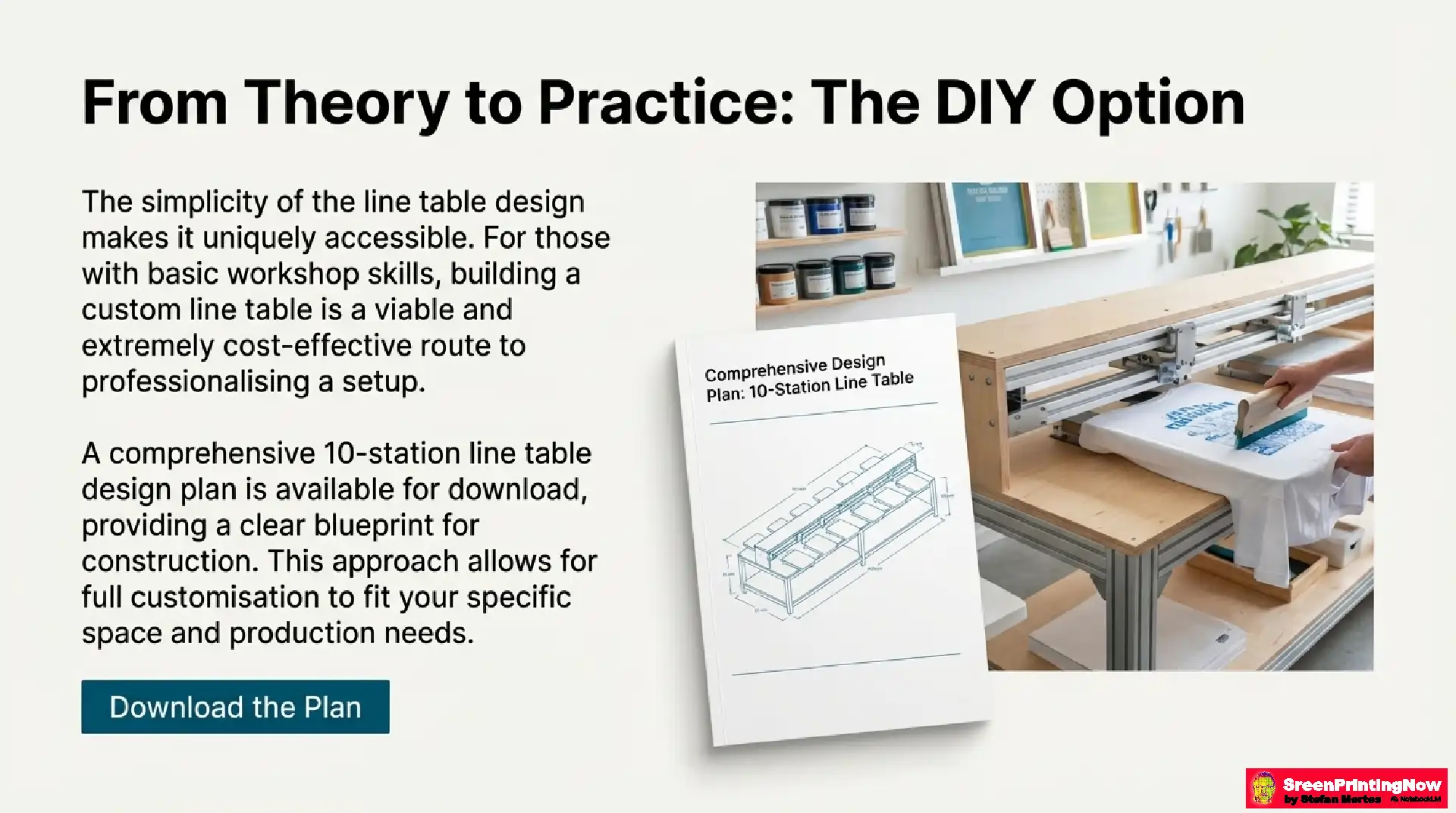
Download a DIY Line Table Plan
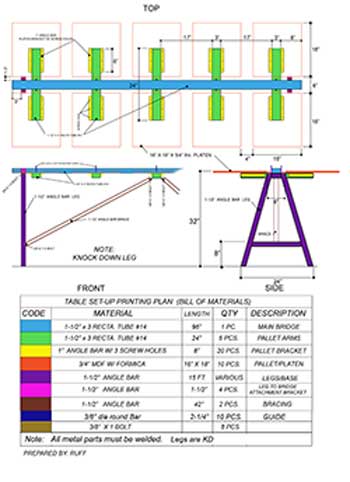
Here is a construction plan, on how to build your own Line Table Screen Printing.
Download here the 10 Station Line Table Design Plan
Line Table screen printing registration options
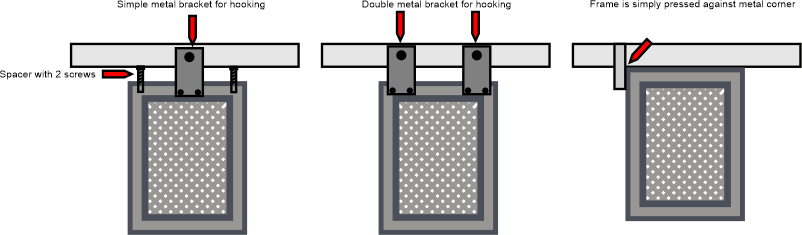
As for micro registration, the most used option, I have seen, are these three options. Where my perfect option is for sure the 3 one. Where you just push the frame in a corner and along the metal or wood bar. It’s the most simple way and with my experience printing with a line table, it has the best registration.
What about the Glass Palette
I saw it here once again in this Forum (opens in a new tab), I never used it for my line table printing. But I did one for my transfer printing once, as glass is very easy to clean, be useful for its purpose. For sure you would need a thick glass.
Videos


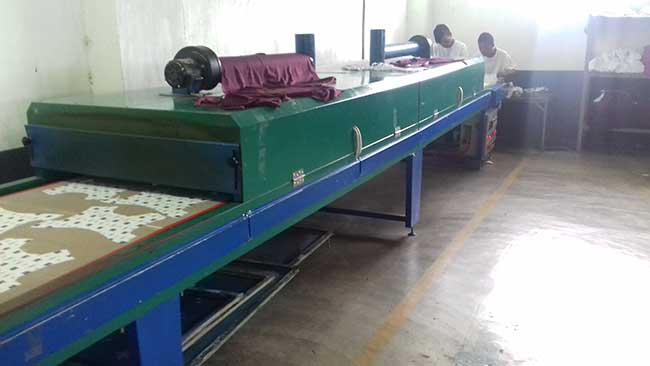
Line table printing curing oven (seen in Madagascar)
After screen printing garments on a table, the garments need to be moved to a separate dryer for curing. This process is not as efficient compared to using a carousel or automatic screen printing machine. With a carousel or automatic machine, the dryer is placed directly next to the printing station, allowing for a seamless transfer of garments from printing to drying. However, this streamlined setup is not possible with table screen printing, as the garments must be manually moved from the printing table to the dryer, which is less efficient and more time-consuming.
Line Table Screen Printing facts
Table screen printing is better-called line table screen printing as we do not print only on one table because we have a line of tables (palettes) to print on. If we speak about line tables screen printing, as seen above (picture 2), we are only able to print on panels and not on finished garments. Where on the videos show, you can print on finished garments.
Summary
Line Table Screen Printing is mostly used in Asia, Africa, and South America. It’s a screen printing technique, where you have pallets next to each other, aligned like a table. This is quite an old technique, but a low-cost starter solution, to screen print T-Shirts. Plastisol inks are often used, as they have a short flashpoint, which makes them easy to print, but mostly used on rotary screen printing machines. However, the trend is now shifting towards environmentally friendly water-based inks. Water-based inks need longer to dry, but the Line Table has clear advantages as it gives the ink more time to cool down before the next color is printed. Line Table printing requires a hot air blower to dry the ink, but this is a low-cost option. As for registration, the most used option is to push the frame into a corner and along a metal or wood bar. This is often the best option for line table printing. Line Table Screen Printing is a low-cost entry to start screen printing and is perfect for water-based inks. It is also interesting for small productions, however, for high production a rotary printing machine is more efficient.


How to print water-based HD print on Mercerized Silicon Finished Fabric??
It peels off easily with hand?
Hi Sued, HD Printing on a Line Table? Please let me know.
Great article but I was confused by this “As the line table does not use a flash cure, the printed ink has time to cool down before the next color is printed.”
If no heat is being applied, what is the printing ink cooling down from please, I can see that maybe the action of the squeegie might cause heat throgh friction but its wouldn’t be much, would it?
Also, why couldn’t off contact be built into the table version, all it would need is for the platen to be 1/8 or 1/4 lower than the bar retaining the screen or again, am i missing something please?
Hi Jayne, you are right, this is wrongly written from my part. When no flash cure is used, no heat is generated.
Concerning Off Contact, If you can build a table with off contact, why not. We sometimes added a small coin under the screen. But in general, off contact is not used and needed, as the ink is smooth and pass well through the screen. Off Contact is often used, when you have problems to clear the screen when printing.
Nice article! The advantage is that for small amounts in multi color a table also needs less space compare to a carousel.
I am thinking to build one in Europe but I do have a question about the registration….
If the screen is positioned for registration how do you make sure your image is exposed onto the screen in the exact location? Does it means that all screen need to be exactly the same, no mm difference? So no wood frames as I have seen in Asia because they are sensitive to moisture and can shrink or expand. What about roller frame?
What is the setup in the exposure box and how about the transparent film? Does the frame need to be in a type of register system as well as the film?
Are there any photos how this part is done?
In offset printing in the old days the plates and the film had holes and you placed them into pins so they were always in the same position when you had to expose. But with a standard screen you buy it is not there. I truly wonder how this is done…. Can you explain please.
Hi Sven,
Registration is the same as you place the frame on the table, you have the same on the exposure box as an example.
Would recommend metal frames, as you say, wood likes to bend.
As said, you expose as your normal frames or setup, just be sure you have the same registration points like on the table, same same 😉
I incl. some images of different registration ideas, or what people do, pins, or just pushing the frame to one corner.
Pushing the frame to one corner, means no additional manipulation of the frames, the pin system would need some work on them. i prefer pushing it to one corner, is low cost, and it works very well, no need for fancy pins.